
What Is Myopia in Children? Signs of Nearsightedness & Myopia Management | Eagan, MN
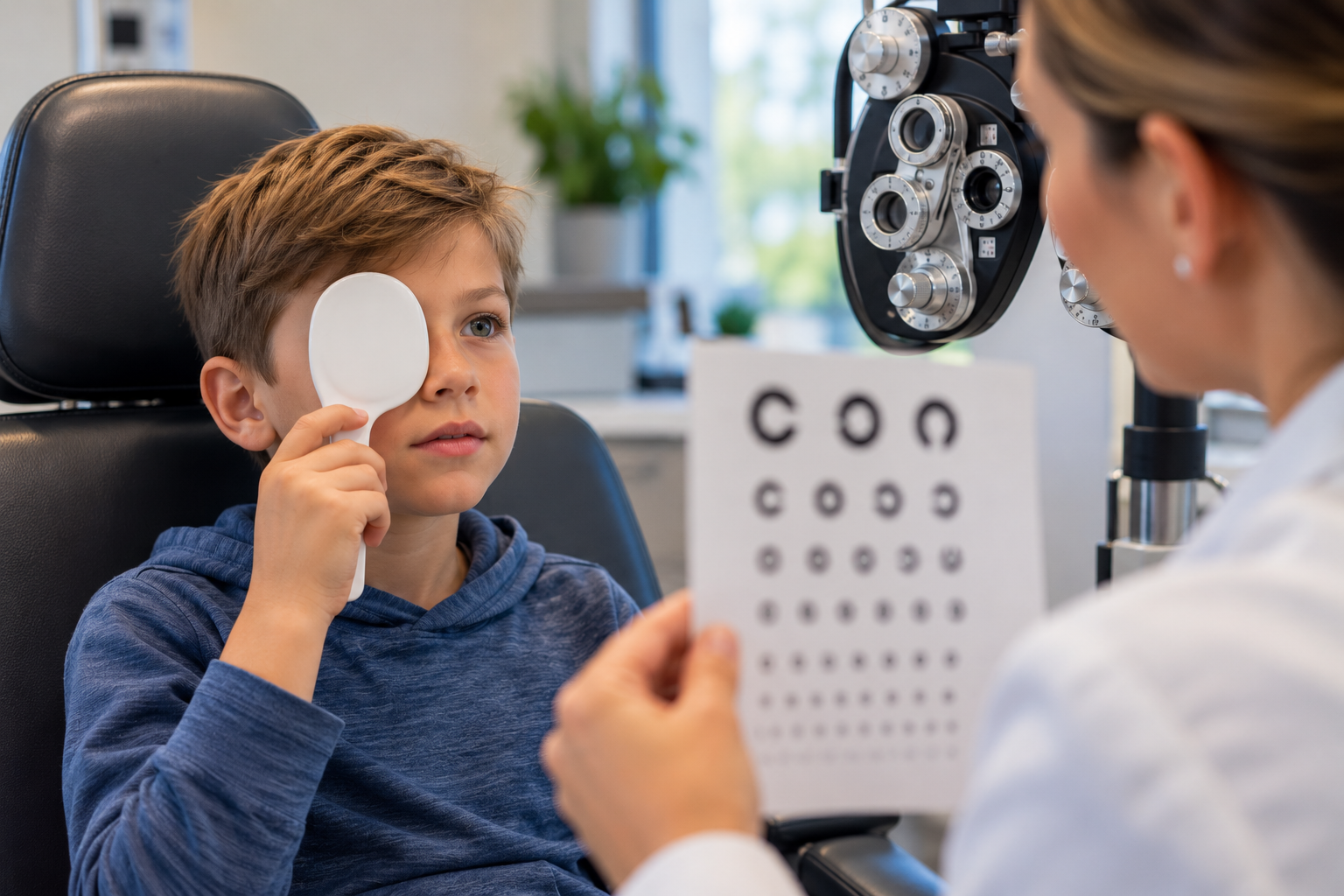
What Is Myopia in Children? Signs of Nearsightedness & Myopia Management | Eagan, MN
Is your child squinting to see the board at school, sitting closer to the television, or struggling to recognize people from a distance? These behaviors may be signs of myopia, also known as nearsightedness.
Myopia is a common vision condition that often begins during childhood and can progress as children grow. While glasses and contact lenses can correct blurry distance vision, specialized treatments may also help slow the progression of myopia in eligible children.
At Blue Lakes Eye Care in Eagan, MN, we understand how important healthy vision is for learning, sports, and everyday activities. Understanding the signs of childhood myopia and the importance of regular pediatric eye exams can help parents make informed decisions about their children's long-term eye health.
In this guide, we'll explain what causes myopia in children, how to recognize the warning signs, and how myopia management may help protect your child's vision as they grow.
What Is Myopia?
Myopia, commonly called nearsightedness, is a refractive error that makes distant objects appear blurry while nearby objects generally remain clearer.
Myopia typically develops when the eyeball grows too long from front to back or when the cornea's shape causes light to focus in front of the retina instead of directly on it.
Children with myopia may have difficulty seeing classroom boards, reading signs across a room, recognizing faces at a distance, or following action during sports.
According to the National Eye Institute, nearsightedness commonly begins between ages 6 and 14 and may continue progressing into early adulthood. Family history can also influence a child's likelihood of developing myopia.
The important distinction: Correcting blurry vision and managing myopia progression are two different goals. Regular glasses or contact lenses help a child see clearly, while specialized myopia management treatments may help slow the worsening of nearsightedness over time.
Parents looking for a pediatric eye doctor in Eagan, MN, can benefit from understanding both aspects of childhood vision care.
7 Signs of Myopia in Children
Children don't always recognize or communicate that their vision is blurry. They may assume everyone sees the world the same way they do.
Recognizing the early signs of myopia can help parents know when to schedule a comprehensive pediatric eye exam.
1. Squinting to See Distant Objects
One of the most common signs of nearsightedness is squinting when looking at something far away.
Your child may squint to see the classroom board, read a sign, watch a sporting event, or recognize someone across a playground.
Squinting can temporarily change how light enters the eye, making distant objects appear somewhat clearer.
2. Sitting Close to the Television
Does your child consistently move closer to the television or hold a tablet unusually close to their face?
Although this behavior can have many explanations, it may indicate that your child has difficulty seeing clearly at a distance.
Pay attention to recurring behaviors rather than relying on one observation alone.
3. Difficulty Seeing the Classroom Board
Children with myopia may struggle to read information written on a classroom board, even when they can read books or complete homework comfortably.
Possible signs include copying information incorrectly, asking to move closer to the front of the classroom, or losing track of visual instructions.
If your child's school performance or classroom participation changes, consider whether an undetected vision problem could be contributing.
4. Holding Books or Devices Very Close
Children with nearsightedness often see nearby objects more clearly than distant ones. Some may compensate by moving books, tablets, or other objects closer.
This behavior alone does not confirm myopia, but it can be a reason to schedule an eye examination.
5. Frequent Headaches or Eye Strain
Some children experience discomfort when trying to see clearly throughout the school day.
Headaches, tired eyes, or difficulty maintaining visual attention can have several causes, including refractive errors. These symptoms are not specific to myopia, so an eye examination can help determine whether a vision problem is involved.
6. Trouble Following Sports or Outdoor Activities
Clear distance vision helps children follow a moving ball, recognize teammates, and respond to activity around them.
A child who struggles to see distant objects during soccer, basketball, baseball, or other sports may have an uncorrected vision problem.
If your child regularly misses visual cues or struggles to see across a field or court, a comprehensive eye exam may be helpful.
7. Increasingly Strong Glasses Prescriptions
If your child already wears glasses and their prescription continues to become stronger, ask their eye doctor whether myopia management may be appropriate.
Myopia often progresses while children are growing. Monitoring prescription changes helps an eye care professional assess the pattern and discuss suitable treatment options.
Remember: Some children with myopia have few obvious symptoms. Regular, age-appropriate eye care is important even when a child doesn't complain about blurry vision.
What Causes Myopia in Children?
Childhood myopia usually develops through a combination of genetic, developmental, and environmental influences.
Understanding these factors can help parents make informed decisions about their child's vision care.
Family History and Genetics
Children with one or both nearsighted parents have a higher likelihood of developing myopia.
However, family history does not determine a child's outcome. Children without nearsighted parents can develop myopia, too.
If myopia runs in your family, discuss your child's risk with an eye care professional and ask how frequently their vision should be monitored.
Eye Growth During Childhood
A child's eyes change as they grow. Myopia can develop when the eyeball grows longer than optimal for focusing light clearly on the retina.
Because childhood is an important period of eye growth, early identification of myopia gives families an opportunity to discuss treatment options that may slow its progression.
Time Spent Outdoors
Research suggests that spending time outdoors is associated with a lower risk of developing myopia in children.
Encouraging outdoor play, physical activity, and time away from prolonged near-focused activities can be beneficial habits.
Outdoor time is not a guaranteed way to prevent or reverse myopia, and children who already have nearsightedness may still need treatment.
Prolonged Near Work
Reading, homework, and digital device use require sustained near vision.
Research has associated certain patterns of near work and reduced outdoor time with myopia. However, screen use alone should not be considered the sole cause of a child's nearsightedness.
Parents can encourage reasonable reading distances, regular breaks during prolonged near work, and a healthy balance between indoor activities and outdoor play.
Why Is Early Myopia Management Important?
Myopia management focuses on helping eligible children maintain clear vision while slowing the progression of nearsightedness.
A child who develops myopia at a young age may have more years during which the condition can progress. Greater levels of myopia are associated with an increased risk of certain eye conditions later in life, including retinal detachment, glaucoma, and cataracts.
This does not mean every nearsighted child will develop these conditions. It does mean that monitoring myopia progression is an important part of long-term eye health.
The goal of myopia management is not simply to prescribe stronger glasses whenever vision changes. It is to assess whether a child may benefit from treatment designed to slow the progression of nearsightedness.
An eye care professional can evaluate your child's prescription, age, eye health, and individual risk factors to determine which options may be appropriate.
Families seeking myopia management in Eagan, MN, should ask about available treatment options and how progress will be monitored over time.
What Are the Treatment Options for Childhood Myopia?
Myopia treatment depends on the child's age, prescription, rate of progression, eye health, lifestyle, and ability to follow the treatment plan.
Options may include standard vision correction, specialized lenses, and certain prescription eye drops.
Not every treatment is appropriate for every child, and the availability of specific products and treatments should be confirmed with your eye care provider.
1. Prescription Eyeglasses
Regular prescription glasses are a common way to correct blurry distance vision caused by myopia.
They can help children see clearly in the classroom, participate in sports, and complete everyday activities.
Some specialized spectacle lenses are specifically designed to correct vision while also helping slow myopia progression. These differ from ordinary single-vision glasses.
Ask your child's eye doctor whether specialized myopia-control glasses are appropriate and available for your child.
2. Specialized Myopia-Control Contact Lenses
Certain multifocal or dual-focus soft contact lenses are designed to correct blurry distance vision while using specialized optical zones intended to help slow myopia progression.
These lenses may be appropriate for some children, depending on their age, prescription, eye health, and ability to follow safe contact lens practices.
Proper fitting, hygiene, and follow-up appointments are essential. Contact lenses carry a risk of eye infection, particularly when cleaning and wearing instructions are not followed.
3. Orthokeratology (Ortho-K)
Orthokeratology, commonly called Ortho-K, uses specially designed rigid contact lenses worn overnight to temporarily reshape the cornea.
This reshaping allows many patients to see more clearly during the day without wearing glasses or contact lenses.
Ortho-K may also help slow myopia progression in some children. However, overnight contact lens wear carries important risks, including potentially serious eye infections.
It requires careful patient selection, specialized fitting, and regular monitoring by an appropriately trained eye care professional.
4. Low-Dose Atropine Eye Drops
Low-dose atropine eye drops may be prescribed to help slow the progression of childhood myopia in selected patients.
The appropriate concentration, expected benefits, possible side effects, and treatment duration vary. Atropine does not correct blurry vision by itself, so children may still need glasses or contact lenses.
Parents should discuss the evidence, potential side effects, and suitability of this option with their child's eye care professional.
Which Myopia Treatment Is Best for My Child?
There is no single best treatment for every child.
Your eye care provider can discuss the potential benefits and limitations of each option, including:
Your child's age and current prescription
How quickly their myopia is progressing
Eye health and individual risk factors
Comfort with glasses or contact lenses
Ability to follow treatment and hygiene instructions
Family preferences, cost, and follow-up requirements
For more information about current approaches to myopia management, visit the American Academy of Ophthalmology's guide to myopia control in children.
5 Ways Parents Can Support Healthy Vision
Professional eye care is important, but everyday habits can also support your child's visual health.
1. Encourage Outdoor Play
Make time for outdoor activities when possible. Playing outside, walking, riding bikes, and participating in sports can help children balance near-focused activities with time outdoors.
Outdoor time is associated with a lower risk of developing myopia, although it cannot guarantee prevention.
2. Take Breaks During Extended Near Work
Encourage children to pause periodically during long periods of reading, homework, gaming, or device use.
One familiar guideline is the 20-20-20 rule: every 20 minutes, look at something approximately 20 feet away for at least 20 seconds.
These breaks may help reduce visual fatigue, although they are not a treatment for myopia itself.
3. Maintain a Comfortable Reading Distance
Encourage your child to avoid holding books or screens excessively close to their face.
Comfortable working distances, good lighting, and regular changes in visual focus can support better visual habits.
4. Follow the Prescribed Treatment Plan
If your child is prescribed glasses, contact lenses, or another myopia-management treatment, follow the eye care professional's instructions.
Attend recommended follow-up appointments so changes in prescription and treatment response can be assessed.
Do not change or discontinue a treatment without discussing it with your provider.
5. Schedule Regular Pediatric Eye Exams
Vision screenings at school or during pediatric visits can identify some potential problems, but they are not a substitute for a comprehensive eye examination.
An eye doctor can assess refractive error, evaluate eye health, and determine whether additional testing or treatment is needed.
For parents looking for pediatric eye exams in Eagan, MN, regular professional eye care can help identify changes in vision as children grow.
When Should My Child Have an Eye Exam for Myopia?
Consider scheduling a comprehensive eye exam if your child:
Squints to see distant objects.
Struggles to read the classroom board.
Frequently moves closer to the television.
Reports blurry distance vision or recurring headaches.
Has a family history of myopia.
Needs increasingly strong glasses prescriptions.
Has not had their vision evaluated despite recurring concerns.
If your child already has myopia, ask how often their prescription and eye health should be monitored.
The appropriate examination schedule depends on age, symptoms, prescription, and individual risk factors.
Seek urgent medical attention for sudden vision loss or a sudden, significant change in vision. Do not wait for a routine appointment if your child experiences these symptoms.
Pediatric Eye Care and Myopia Management in Eagan, MN
Clear vision supports children's learning, confidence, sports participation, and everyday experiences. When nearsightedness develops during childhood, understanding the condition and monitoring its progression can help families make informed decisions about their child's eye health.
At Blue Lakes Eye Care in Eagan, Minnesota, we encourage parents to take concerns about their children's vision seriously and seek professional guidance when symptoms or prescription changes occur.
If you are concerned about your child's distance vision, have noticed increasingly strong glasses prescriptions, or want to learn more about myopia management, schedule a comprehensive eye exam and ask which options may be appropriate for your child.
Families from Eagan, Mendota Heights, Inver Grove Heights, Rosemount, Apple Valley, Lakeville, and nearby South Metro communities can explore pediatric eye care options at Blue Lakes Eye Care.
Help your child build healthy vision habits today. Ask your eye care provider whether a myopia-management evaluation is appropriate.
Frequently Asked Questions About Myopia in Children
1. What is the difference between myopia and nearsightedness?
Myopia and nearsightedness are two names for the same refractive error. Children with myopia generally see nearby objects more clearly than distant objects because light focuses in front of the retina.
2. At what age does myopia usually develop?
Myopia commonly develops during school-age years, often between ages 6 and 14. It can begin earlier or later, and it may progress as a child grows.
3. Can childhood myopia be reversed?
Myopia generally cannot be reversed through ordinary glasses, contact lenses, or lifestyle changes. Glasses and contact lenses correct blurry vision, while certain treatments may help slow progression.
4. Can screen time cause myopia in children?
The relationship between near work, screen use, and myopia is complex. Research has associated certain patterns of near work and reduced outdoor time with myopia, but screen use alone should not be considered the sole cause.
Encouraging breaks and outdoor activities can support healthy visual habits.
5. Do regular glasses slow myopia progression?
Standard single-vision glasses correct blurry distance vision but are not specifically designed to slow myopia progression. Certain specialized spectacle lenses and contact lenses may help slow progression in eligible children.
Ask your child's eye doctor about the differences.
6. Is myopia management safe for children?
Several myopia-management options are used in appropriately selected children, but each has potential limitations and risks. Contact lenses can cause infections, and prescription eye drops may have side effects.
An eye care professional can explain the benefits, risks, and monitoring requirements of each option.
7. How do I know if my child needs myopia management?
Children with diagnosed myopia, especially those whose prescriptions are increasing, may benefit from an evaluation. Your eye doctor can review prescription changes, assess risk factors, and discuss suitable treatment options.
8. Where can I find pediatric eye exams and myopia management in Eagan, MN?
Blue Lakes Eye Care serves patients in Eagan and nearby South Metro communities. Contact the clinic to ask about pediatric eye exams, available myopia-management services, and whether an evaluation is appropriate for your child.
Quick Links
Helpful Articles
article_category: restorative
article_category: vision therapy
article_category: contact lenses
article_category: health
article_category: conditions
article_category: eye surgery co-management
article_category: exotic
article_category: cosmetic
article_category: products
article_category: psychiatry
article_category: faqs
article_category: cats
article_category: general
article_category: services
article_category: technology
article_category: dogs
article_category: surgical procedures
article_category: aesthetics
article_category: preventative
article_category: ocular disease management
article_category: eyeglasses
article_category: eye health
article_category: large animal
[]
Flowbite is an open-source library of interactive components built on top of Tailwind CSS including buttons, dropdowns, modals, navbars, and more.
Check out this guide to learn how to get started and start developing websites even faster with components on top of Tailwind CSS.
All Eyecare Services
We offer a wide variety of eye care services to the Eagan community. Contact us with any questions about our services.

Keep In Touch
For non-urgent questions or to learn more about our services, contact us today!
© 2026 Blue Lakes Eye Care. All rights Reserved - Accessibility Statement - Privacy Policy - Sitemap
Managed and Designed by 