
Why Is One Eye Blurrier Than the Other? Causes & When to See an Eye Doctor | Eagan, MN
Why Is One Eye Blurrier Than the Other? Causes & When to See an Eye Doctor | Eagan, MN
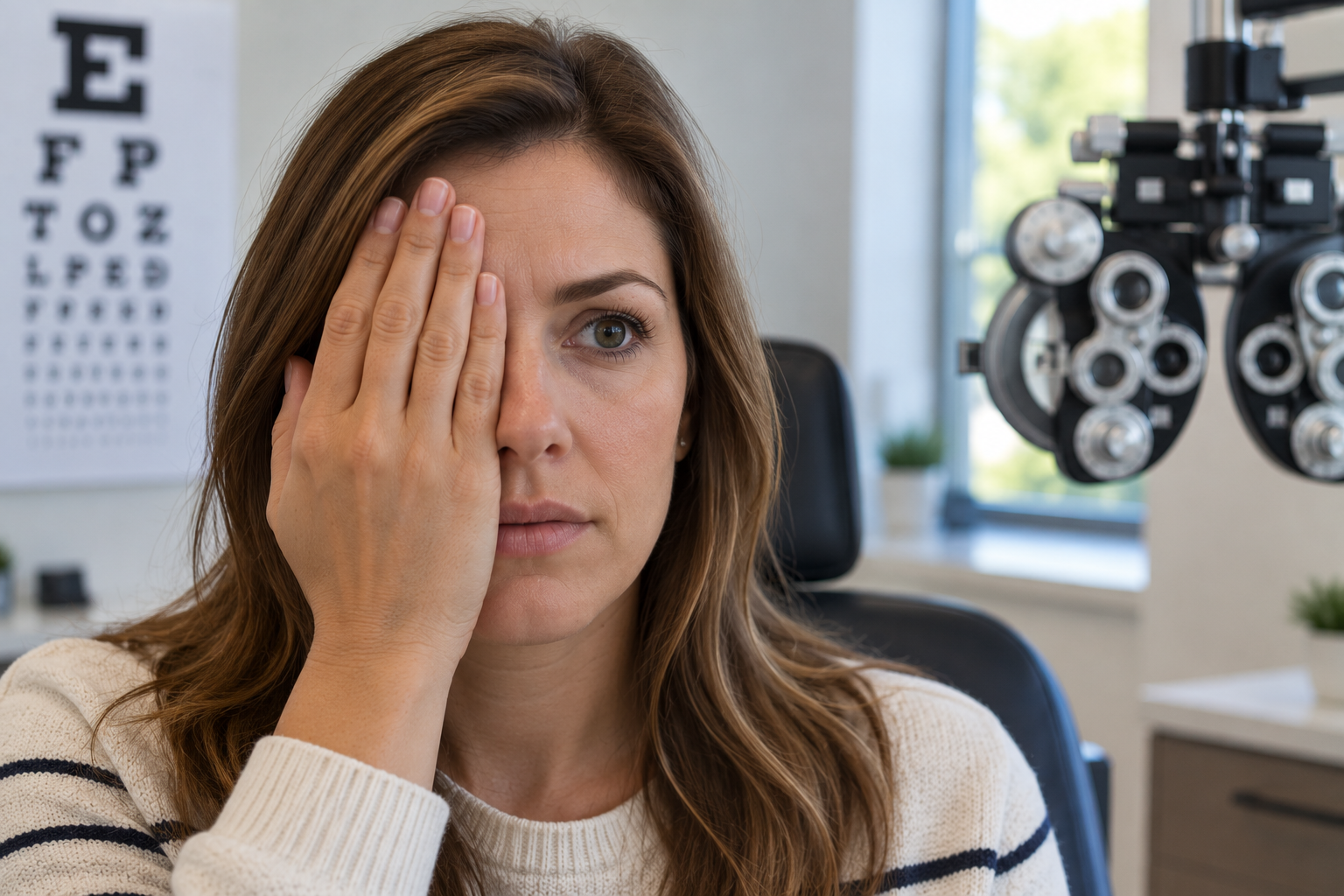
Have you noticed that one eye is blurrier than the other, even when you are wearing your glasses or contact lenses? Maybe your right eye sees clearly while your left eye seems slightly fuzzy. Or perhaps one eye has gradually become noticeably worse than the other.
Having different vision between your two eyes is fairly common, but new or unexplained blurry vision in one eye should not automatically be dismissed as simply needing a new glasses prescription.
Differences in vision between the eyes can result from something as straightforward as a different prescription in each eye, but they can also be related to astigmatism, dry eye, cataracts, glaucoma, retinal conditions, macular problems, or other eye health concerns. National Eye Institute
At Blue Lakes Eye Care in Eagan, MN, a comprehensive eye examination can evaluate both your vision and the health of your eyes to help determine why one eye may not be seeing as clearly as the other.
Is It Normal for One Eye to Be Blurrier Than the Other?
It can be.
Your two eyes do not necessarily have identical prescriptions. One eye may be more nearsighted, farsighted, or astigmatic than the other. This difference is called anisometropia.
For some people, the difference has been present for years and does not represent a new health problem.
The important question is:
Is the difference new or getting worse?
If one eye has recently become blurrier, especially if the change occurs suddenly, it deserves an eye examination.
A comprehensive eye exam can determine whether the difference is related to your prescription or whether there may be another underlying cause.
What Causes One Eye to Be Blurrier Than the Other?
There are several possible causes of blurry vision in one eye.
1. Different Glasses Prescriptions Between Your Eyes
One of the most common explanations is simply that your eyes have different prescriptions.
For example:
- Your right eye may be nearsighted while your left eye is less nearsighted.
- One eye may have more astigmatism.
- One eye may be farsighted while the other is not.
- Your prescription may have changed more significantly in one eye.
Refractive errors—including nearsightedness, farsightedness, astigmatism, and presbyopia—are common causes of blurry vision and are typically identified during an eye examination. National Eye Institute
If one eye consistently looks clearer than the other when you are wearing your glasses, your prescription may need to be updated.
Internal link opportunity: Link “astigmatism” to your existing What Is Astigmatism? blog.
2. Astigmatism
Astigmatism can make vision blurry or distorted, and it may affect one eye more than the other.
You may notice:
- Blurry vision at distance
- Blurry vision up close
- Difficulty seeing clearly at night
- Glare around headlights
- Eye strain
- Headaches
- Squinting
Astigmatism occurs when the shape of the cornea or another part of the eye prevents light from focusing properly on the retina. National Eye Institute
If one eye has significantly more astigmatism than the other, you may notice a noticeable difference in clarity between your eyes.
3. Dry Eye
Dry eye is another common reason one eye may temporarily seem blurrier than the other.
The tear film helps create a smooth optical surface over the eye. When the tear film becomes unstable, vision can fluctuate.
Symptoms can include:
- Blurry or fluctuating vision
- Burning
- Stinging
- Scratchy eyes
- Redness
- Excessive tearing
- A feeling that something is in your eye
Dry eye can affect one eye more than the other, particularly if environmental conditions, eyelid problems, contact lens wear, or other factors differ between the eyes.
If your vision becomes clearer after blinking several times, an unstable tear film may be contributing to the problem.
Internal link opportunity: Connect this section to your Blue Lakes Eye Care content about dry eye treatment and dry eye and contact lenses.
4. A Cataract in One Eye
A cataract occurs when the normally clear lens inside the eye becomes cloudy.
Cataracts can cause:
- Blurry or hazy vision
- Glare around lights
- Difficulty seeing at night
- Faded colors
- Light sensitivity
- Double or ghost images
- Frequent changes in glasses prescriptions
Importantly, cataracts can occur in one eye or both eyes. National Eye Institute
This means it is possible for one eye to gradually become blurrier while the other eye continues to see relatively well.
If you are noticing that one eye has become progressively cloudy or hazy, a comprehensive eye examination can determine whether a cataract or another condition may be responsible.
5. Glaucoma
Glaucoma is another reason an eye doctor may want to investigate unexplained differences in vision.
Glaucoma damages the optic nerve and can cause permanent vision loss. One challenge is that early glaucoma often has few or no noticeable symptoms. National Eye Institute
Glaucoma can affect one eye or both eyes. National Eye Institute
Because vision loss from glaucoma can develop gradually, regular comprehensive eye examinations are important for detecting changes before significant vision loss occurs.
An eye examination may include evaluation of:
- Eye pressure
- Optic nerve appearance
- Peripheral vision
- Retina
- Other structures of the eye
Internal link opportunity: Link “comprehensive eye examination” to your existing Common Tests Included in a Comprehensive Eye Exam page.
6. Retinal or Macular Problems
Sometimes blurry vision in one eye can be related to the retina or macula.
The macula is the central portion of the retina responsible for detailed central vision.
Conditions affecting the macula can cause:
- Blurry central vision
- Distorted vision
- Wavy lines
- Difficulty reading
- Dull or faded colors
- Difficulty recognizing faces
Some retinal conditions can affect one eye more than the other.
For example, macular edema can cause blurry or wavy vision and may initially be more noticeable in one eye. National Eye Institute
This is one reason an eye examination should evaluate more than just your glasses prescription.
7. Amblyopia or "Lazy Eye"
If one eye has always been significantly weaker than the other, particularly since childhood, amblyopia may be one possible explanation.
Amblyopia develops when the brain relies more heavily on one eye and does not develop normal vision in the other.
It can be associated with:
- Different prescriptions between the eyes
- Significant astigmatism
- Strabismus
- Cataracts or other conditions affecting vision during childhood National Eye Institute
Adults with long-standing amblyopia may have one eye that simply has never seen as clearly as the other.
This is different from an eye that recently becomes blurrier.
8. Contact Lens Problems
If you wear contact lenses, one eye may become blurrier because of a problem with the lens itself or the ocular surface.
Possible causes include:
- A dirty or damaged contact lens
- A lens that is not fitting properly
- Dry eye
- Deposits on the lens
- Wearing a lens longer than recommended
- An incorrect prescription
- Irritation or inflammation
If removing the contact lens does not resolve the blurry vision—or if you have pain, redness, light sensitivity, or discharge—contact your eye doctor promptly.
Internal link opportunity: Connect this section to your specialty contact lens and multifocal contact lens content.
9. Corneal Problems
The cornea is the clear front surface of your eye and plays an important role in focusing light.
Changes to the cornea can affect vision in one eye.
Depending on the condition, you may experience:
- Blurry vision
- Distorted vision
- Glare
- Light sensitivity
- Changes in your prescription
- Difficulty seeing clearly with glasses or contacts
A comprehensive eye examination can evaluate the cornea and other structures to help determine what may be causing the difference in vision.
Why Is One Eye Suddenly Blurry?
Sudden blurry vision in one eye is different from having one eye that has always been slightly weaker.
If the change happens suddenly, you should seek prompt medical evaluation.
Potential causes of sudden vision changes can include problems involving the retina, optic nerve, blood vessels, or other parts of the eye.
Seek urgent eye care if blurry vision is accompanied by:
- Sudden flashes of light
- A sudden increase in floaters
- A dark curtain or shadow across your vision
- Sudden vision loss
- Significant eye pain
- Severe redness
- Nausea or vomiting with eye pain
- New double vision
- Other sudden neurological symptoms
A retinal detachment, for example, can cause sudden flashes, a sudden increase in floaters, or a curtain-like shadow over your vision and requires immediate medical attention. National Eye Institute
Sudden intense eye pain, redness, nausea, and blurry vision can also be symptoms of angle-closure glaucoma, which requires immediate evaluation. National Eye Institute
Do not wait for a routine eye appointment if you are experiencing sudden or severe vision loss.
Why You Shouldn't Just Get New Glasses
If one eye is blurrier than the other, it can be tempting to assume that you simply need a new prescription.
Sometimes that's exactly what is happening.
But an eye examination can do much more than determine your prescription.
A comprehensive eye exam can evaluate:
- Visual acuity
- Refraction
- Eye pressure
- Cornea
- Lens
- Retina
- Macula
- Optic nerve
- Peripheral vision
- Overall ocular health
A dilated eye examination can also help identify eye diseases that may not be obvious from symptoms alone. National Eye Institute
This is particularly important when blurry vision is new, worsening, or significantly different between your two eyes.
What Happens During an Eye Exam for One Blurry Eye?
When you visit an eye doctor because one eye is blurrier than the other, your examination may include several components.
Visual Acuity Testing
This determines how clearly each eye sees at different distances.
Refraction
Your optometrist determines whether a different glasses or contact lens prescription could improve your vision.
Eye Health Evaluation
Your doctor examines the front and back portions of your eyes for abnormalities.
Eye Pressure Measurement
Eye pressure testing can be part of evaluating glaucoma risk.
Retinal Examination
The retina and optic nerve are evaluated for signs of disease or other abnormalities.
Retinal Imaging
Imaging can provide detailed documentation of the retina and can help your eye doctor monitor changes over time.
The exact tests performed depend on your symptoms, age, medical history, and examination findings.
Can an Eye Exam Find the Cause of One Eye Being Blurrier?
In many cases, yes.
The goal is not simply to determine which eye sees worse.
The goal is to determine why.
Your eye doctor will consider your symptoms, medical history, prescription, examination findings, and other risk factors.
The cause could be relatively simple—such as a prescription difference—or could require additional evaluation for an eye health condition.
That is why a comprehensive eye exam is so valuable.
When Should You See an Eye Doctor for One Blurry Eye?
Schedule an eye examination if:
- One eye has gradually become blurrier
- Your vision has changed since your last exam
- Your glasses no longer seem to correct one eye adequately
- You notice distortion in one eye
- You are experiencing frequent headaches or eye strain
- Your vision fluctuates frequently
- You have difficulty seeing at night
- You notice changes in your central vision
- You have a history of eye disease
- You have diabetes or high blood pressure
- You haven't had a comprehensive eye exam recently
And remember: sudden or severe vision changes require prompt evaluation rather than waiting for a routine appointment.
One Eye Blurrier Than the Other in Children
Differences between the eyes are particularly important in children.
If one eye consistently sees less clearly, the developing visual system may favor the stronger eye. Certain childhood vision problems can contribute to amblyopia if not identified and addressed appropriately. National Eye Institute
Parents may not always realize that a child has a vision problem because children often assume that the way they see is normal.
Watch for signs such as:
- Covering one eye
- Squinting
- Tilting the head
- Sitting too close to screens
- Difficulty reading
- Avoiding certain activities
- Complaining about headaches
- Trouble seeing the board at school
- One eye appearing to wander
Regular pediatric eye exams can help identify vision problems early.
This makes comprehensive children's eye care an important part of healthy visual development.
Protect Your Vision With Regular Comprehensive Eye Exams
Your eyes work together as a team, but they don't always have identical prescriptions or identical health.
A small difference between your eyes may be completely normal.
However, a new or worsening difference in vision deserves attention.
A comprehensive eye examination can help determine whether one eye is simply more nearsighted, farsighted, or astigmatic—or whether blurry vision could be related to dry eye, cataracts, glaucoma, retinal disease, macular problems, or another eye condition.
At Blue Lakes Eye Care in Eagan, MN, our comprehensive eye exams evaluate both vision and ocular health using modern diagnostic technology.
Comprehensive Eye Exams in Eagan, MN
If you are searching for an eye doctor in Eagan, MN because one eye is blurrier than the other, Blue Lakes Eye Care provides comprehensive eye care for children and adults.
Our services include:
- Comprehensive Eye Exams
- Pediatric Eye Exams
- Ocular Disease Management
- Diabetic Eye Exams
- Dry Eye Treatment
- Myopia Management
- Specialty Contact Lenses
- Eyewear
- Retinal health evaluation
- Cataract evaluation
- Glaucoma evaluation
Blue Lakes Eye Care serves patients from Eagan, Mendota Heights, Inver Grove Heights, Rosemount, Apple Valley, Lakeville, West St. Paul, and communities throughout the South Metro.
If one eye has become noticeably blurrier than the other, don't simply assume you need a stronger prescription.
Schedule a comprehensive eye exam to find out what's really causing the difference.
📍 Blue Lakes Eye Care
855 Vikings Parkway, Suite B
Eagan, MN 55121
📞 651-280-4420
Frequently Asked Questions
Why is my right eye blurry but my left eye is clear?
Your eyes can have different prescriptions, including different levels of nearsightedness, farsightedness, or astigmatism. However, new one-sided blurry vision can also be caused by dry eye, cataracts, retinal problems, glaucoma, or other conditions and should be evaluated.
Why is one eye suddenly blurry?
Sudden blurry vision can have several causes. Some are urgent, particularly when accompanied by flashes, new floaters, a curtain or shadow, severe pain, or sudden vision loss. Retinal detachment and certain forms of glaucoma require immediate evaluation. National Eye Institute
Can dry eye make one eye blurry?
Yes. An unstable tear film can cause fluctuating or blurry vision, and symptoms can sometimes be more noticeable in one eye.
Can cataracts affect only one eye?
Yes. Cataracts can occur in one eye or both eyes, and one eye may become noticeably blurrier before the other. National Eye Institute
Can glaucoma cause blurry vision in one eye?
Glaucoma can affect one eye or both eyes. Early glaucoma often has no obvious symptoms, which is why comprehensive eye examinations are important. National Eye Institute
Should I get an eye exam if one eye is blurrier than the other?
Yes—particularly if the difference is new, worsening, or unexplained. A comprehensive eye exam can evaluate your prescription as well as the health of your eyes.
Quick Links
Helpful Articles
article_category: products
article_category: psychiatry
article_category: faqs
article_category: cats
article_category: general
article_category: services
article_category: technology
article_category: dogs
article_category: restorative
article_category: vision therapy
article_category: contact lenses
article_category: health
article_category: conditions
article_category: eye surgery co-management
article_category: exotic
article_category: cosmetic
article_category: surgical procedures
article_category: aesthetics
article_category: preventative
article_category: ocular disease management
article_category: eyeglasses
article_category: eye health
article_category: large animal
[]
Flowbite is an open-source library of interactive components built on top of Tailwind CSS including buttons, dropdowns, modals, navbars, and more.
Check out this guide to learn how to get started and start developing websites even faster with components on top of Tailwind CSS.

All Eyecare Services
We offer a wide variety of eye care services to the Eagan community. Contact us with any questions about our services.

Keep In Touch
For non-urgent questions or to learn more about our services, contact us today!
© 2026 Blue Lakes Eye Care. All rights Reserved - Accessibility Statement - Privacy Policy - Sitemap
Managed and Designed by 